


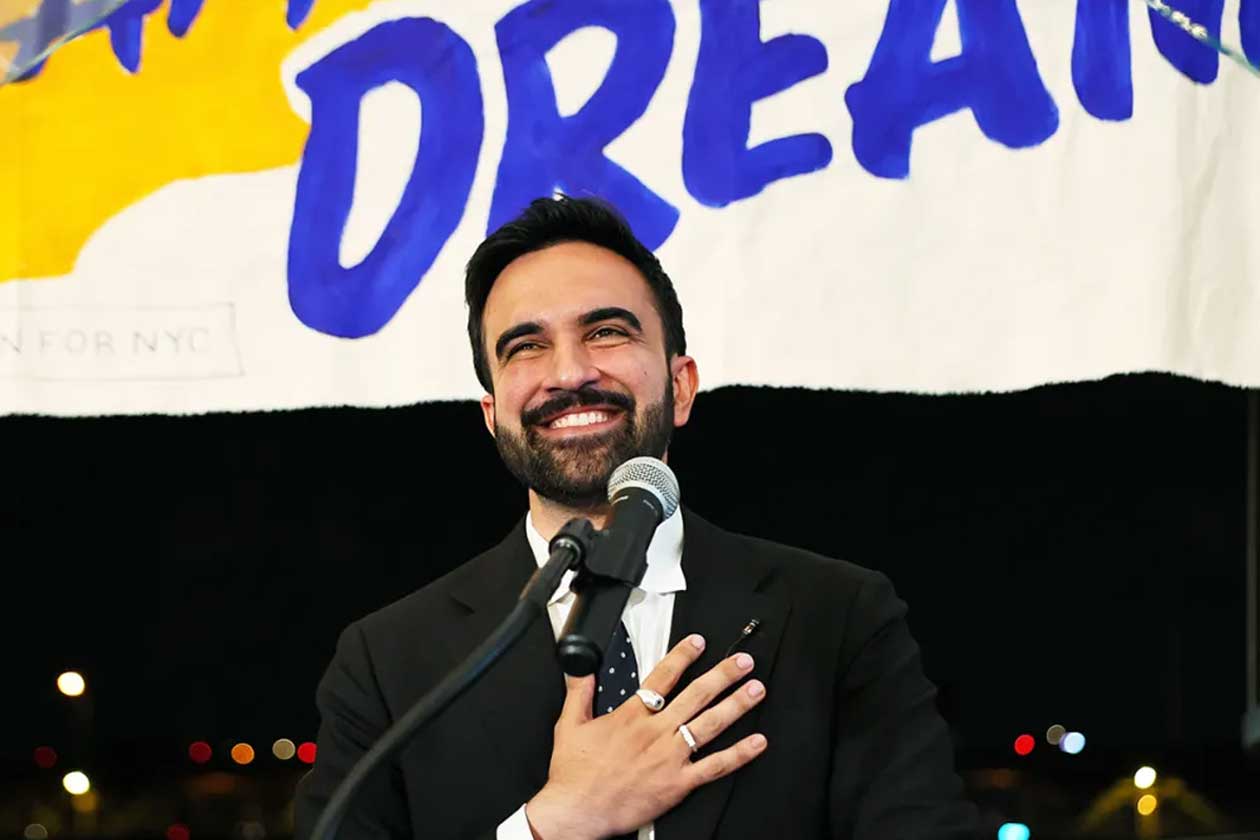
Zohran Mamdani’s win in the New York mayoral race has become a major talking point across U.S. politics. Analysts and party insiders are now asking: Is this the new direction of the Democratic Party—or simply an exceptional moment?
On Tuesday (November 4), Mamdani defeated former Governor Andrew Cuomo, sending a message that resonated far beyond New York. He has pledged to bring the Democratic Party back to the side of working people and push previously marginalized ideas into the mainstream.
Cuomo had framed the race as a “party civil war,” pitting his centrist faction against a new generation of progressives embodied by Mamdani.
Brooklyn voter Michael Blackman, 68, said, “At least Mamdani stands for something. He brings new ideas beyond the old establishment.” He argued that Cuomo represents “the same old politics,” with close ties to wealthy donors—and even influence from Donald Trump.
Progressive group Justice Democrats said in a statement, “Mamdani’s victory is a warning to every establishment, corporate Democrat—if you’re not working for ordinary people, your time is running out.”
New Model or One-Off?
Analysts believe Mamdani’s campaign could become a new blueprint for Democrats. As a member of the Democratic Socialists of America with a firm pro-Palestine stance, he has attracted national attention—and concern. Some fear this position could cost Democrats votes in the 2026 midterms.
Senator Chuck Schumer remained neutral throughout the race. But political analyst Trip Yang thinks Mamdani’s win reflects where the party is headed: voters want effective leadership, not labels.
“Whether you call yourself socialist, moderate, or conservative, voters want to know if you’re speaking to their real problems,” Yang said.
In New York, he added, that problem is economic resilience—and Mamdani built his campaign around it.
Yang also noted that Mamdani broke from the typical Democratic playbook: “Most Democrats campaign only in safe spaces. Mamdani did the opposite—he faced critical media and stayed rooted in the community.”
“The Defining Issue of Our Time”
Bard College historian Daniel Ortel-London said economic resilience is “the defining issue of our time.”
“Mamdani has shown that economic fairness and social justice can move forward together,” he said—a position that has boosted his popularity among progressives, especially due to his outspoken stance against the Gaza killing. Despite Cuomo attacking him as “sympathetic to terrorism,” Mamdani did not waver.
One supporter, Shabnam Salehzadehi, said, “Mamdani doesn’t compromise on principles. He sees the humanity of Palestinians—that’s what sets him apart.”
The Challenges Ahead
Mamdani now faces a major challenge: delivering on his ambitious agenda. His plans to raise corporate and wealth taxes may face stiff resistance from the governor and the legislature.
But historian Ortel-London believes success is possible “if he shows strong leadership and persistence—just as Republican Mayor Michael Bloomberg once managed to raise taxes.”
New York voter Samad Ahmed, 34, said, “For the first time, it feels like someone is actually representing us. Now he has to prove that our trust wasn’t misplaced.”
He added, “New Yorkers are blunt—if he fails, they won’t hesitate to show him the door.”
Ultimately, Mamdani’s victory marks the beginning of a major test—not just for New York, but for the future direction of the Democratic Party itself.


