


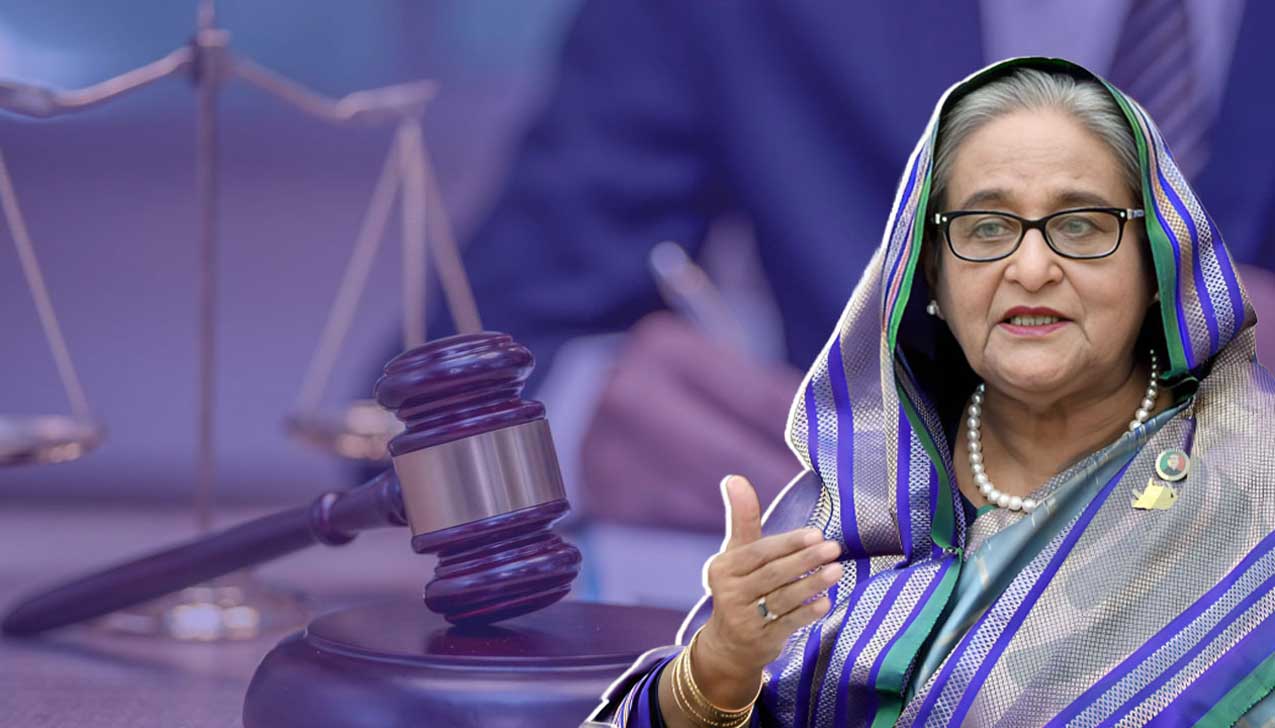
Former Prime Minister Sheikh Hasina says millions of Awami League supporters will boycott next year’s national election after the government barred her party from contesting.
She made the remarks in an interview with Reuters on Wednesday (29 October) in New Delhi.
Speaking separately to AFP, Hasina dismissed allegations that she personally ordered security forces to open fire on protesters, calling the claim “baseless.” However, she acknowledged that “some mistakes” occurred within the chain of command.
Overall, she insisted that decisions made by senior officials during the crisis were “proportionate and taken in good faith” with the aim of minimizing casualties.
When asked by The Independent if she would apologize to families of those killed during the mass uprising, Hasina said she mourned every child, sibling, relative, and friend who died — but refused to offer a formal apology, claiming political opponents had conspired to create unrest and overthrow her government.

“I express sorrow for the lives lost,” she said. “But the allegation that I ordered police to open fire on protesters is completely false.”
The 78-year-old former leader told Reuters that she would not return to Bangladesh if elections are held under any government that excludes the Awami League. She plans to remain in India for the foreseeable future.
Hasina fled to India in August 2024 after a student-led uprising toppled her government. The interim administration led by Nobel Peace Prize laureate Professor Muhammad Yunus has governed Bangladesh since then and has pledged to hold elections in February next year.
In her first media interaction since her dramatic fall from power after 15 uninterrupted years, Hasina told Reuters via email that banning the Awami League was “not only unjust but self-defeating.”
She emphasized the need for electoral legitimacy:
“Millions of people support the Awami League. In the current situation, they will not vote. You cannot disenfranchise millions if you want a functioning political system.”
Hope That Awami League Will Be Allowed to Contest
Bangladesh has more than 126 million registered voters. For decades, politics has been dominated by the Awami League and the Bangladesh Nationalist Party (BNP), with the BNP widely expected to perform strongly in the upcoming election.
In May, the Election Commission suspended the Awami League’s registration. Prior to that, the Yunus-led government had banned all political activities of the party, citing national security concerns and investigations into alleged war crimes involving senior leaders.
Hasina said her supporters are not being urged to back any other party:
“We still hope wisdom will prevail and we will be allowed to contest.”
She did not comment on whether she or her representatives were holding secret talks with Bangladeshi authorities about restoring her party’s ability to participate in the election.
Spokespersons for Dr. Yunus did not offer immediate comment.
Though praised internationally for transforming Bangladesh’s economy, Hasina has faced persistent accusations of human rights abuses and repression of dissent. She secured a fourth consecutive term in 2024 in an election boycotted by the main opposition, whose top leaders were either jailed or in exile.
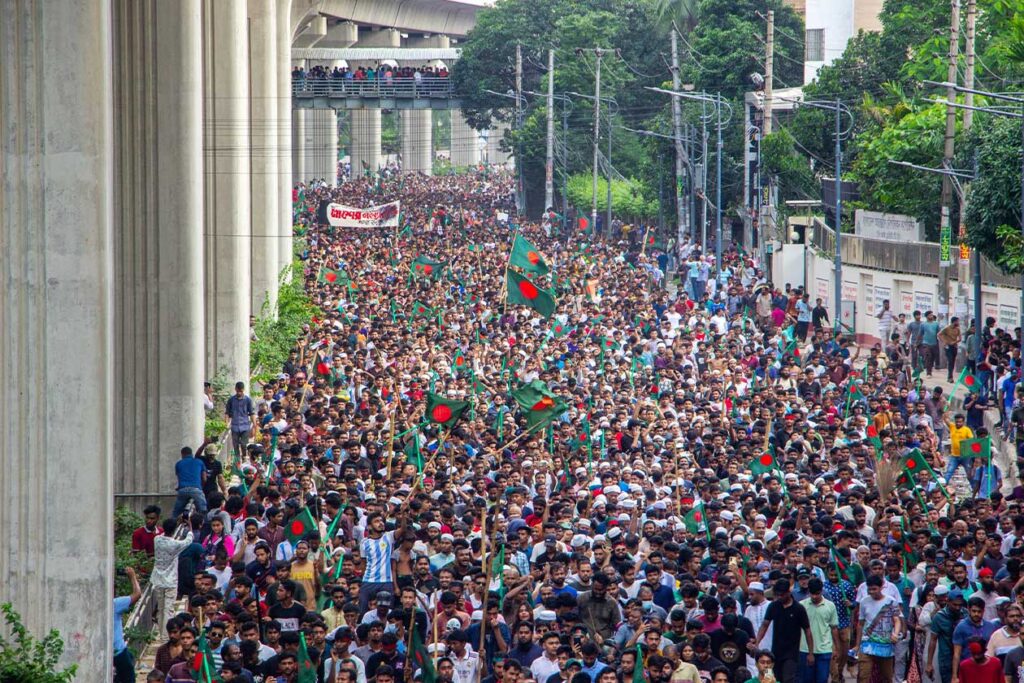
Bangladesh’s International Crimes Tribunal has completed proceedings against her, bringing charges of crimes against humanity linked to the violent crackdown on student protests in mid-2024.
A UN report estimates that around 1,400 people were killed and several thousand injured between 15 July and 5 August 2024, most shot by security forces — the deadliest violence since the 1971 Liberation War.
Prosecutors further allege that Hasina oversaw enforced disappearances and torture of opposition activists in secret detention centers run by state agencies.
Hasina has rejected all allegations, calling them politically motivated and describing the tribunal as a “kangaroo court” where conviction is inevitable. She said she was often not notified of hearings and was denied the chance to defend herself.
No Immediate Plans to Return Home
Despite the turmoil, Hasina said the Awami League will eventually return to Bangladesh’s political landscape — whether as a governing party or in opposition — and insisted that leadership does not need to stay within her family.
Her son and adviser Sajeeb Wazed, who lives in Washington, told Reuters last year that he would consider leading the party if asked.
“It’s not about me or my family,” she said. “To achieve the future we want for Bangladesh, we must restore constitutional governance and political stability. No single person or family determines our nation’s future.”
Hasina’s father and three brothers were assassinated during a military coup in 1975 while she and her sister were abroad. She says she lives freely in Delhi but remains cautious due to her family’s violent history.
A few months ago, a Reuters journalist spotted Hasina walking quietly through New Delhi’s historic Lodhi Gardens accompanied by two men believed to be her security guards. Some passers-by recognized her, and she greeted them with a nod.
“I want to return home,” she said. “But only if the government is legitimate, the constitution upheld, and law and order genuinely maintained.”
After Hasina’s ouster, Awami League supporters initially faced targeted attacks, though the streets have since remained mostly calm. However, clashes erupted earlier this month during the signing of a national reform charter.
| Sheikh Hasina Refuses to Apologize for Uprising Deaths
Read more in BANGLADESH


